Yacht Mooring Marina Berth


Reservation Request


Sailing News

Blue water cruising seminar

Expert advice

Woman with brain tumour sails around Britain

Josie Phillips arrives back in Ipswich

Welshman's boat sinks on circumnavigation

Fundraiser planned for solo sailor


Yacht Port Cartagena


We know from the Ora Maritima, a description of a nautical journey written by the Roman Rufo Festo Avieno in the 4th Century BC, that the city of Cartagena was founded in 227 BC by the Carthaginian general Asdrubal, who changed the original name from Mastia to Quart Hadast. The city remained under Carthaginian control until 209 BC, when the Roman Cornelio Escipion conquered it during the Second Punic War.


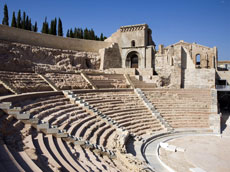
Cartagena was to live its period of greatest splendor under Roman rule between the end of the 3rd Century BC and the beginnings of the 2nd Century AD. In 44 BC, it was to receive the title Nova Carthago. The city ´s importance rested, together with its mining richness, on its privileged position and the uniqueness of its topography, surrounded by hills and with a lake, or inland sea (El Almarjal), to the north, which enabled the city to be easily defended.


With the end of the Roman Empire, the city entered a period of decadence of which we have little information. We do know that the Vandals passed through the city and that it was dominated by the Visigoths until 555 AD, the year in which the Byzantine troops of Justinian took the city and converted it into the capital of the province of Spania, which covered the southeasterly part of the peninsula from Malaga to Cartagena itself. The city was re-taken by the Visigoths around 621 AD, and remained under their control until the Arab conquest in 734 AD.
In 1245 AD, Alfonso X the Wise - who at that time was still a Prince - conquered the city. The following Low Medieval centuries were a period of decadence, which drew to its end in the 16th Century as the country experienced a general economic and political resurgence. However, the widespread epidemics that assailed the country during the 17th Century brought this phase to a halt.


Cartagena recovered its former importance during the 18th Century. As a result of its naming in 1728 as the capital of the Mediterranean Maritime Department, the construction of the city´s Arsenal, castles and the barracks covered by the city´s fortification plan, a great constructive and merchant activity was responsible for attracting large numbers of new inhabitants that quickly led the population to grow from 10,000 to 50,000.
Following a new period of crisis during the first half of the 19th Century, the city was to enjoy a new upsurge as a result of its mining activities, which in turn served as stimulation for the industrial and economic activities. It was following the destruction caused by the Cantonal Revolution in 1873 that Cartagena was to acquire its current appearance, with the construction of numerous public and private buildings that reflect the most significant eclectic and modernist tendencies of the age.


Cartagena faced the Second Spanish Republic and the Spanish Civil War immersed in a new economic crisis, which was the result of the mining crisis produced towards the end of the 1920´s. During the Civil War, the city became one of the most important strongholds of the Republican Government and was the last city in Spain to surrender to the troops of General Franco. During the 1950´s, Cartagena experienced the beginning of a new prosperity through the implantation of numerous industrial companies in the area known as Valle de Escombreras, a situation that was to last until the industrial crisis at the beginning of the 1990´s. Since recovering from this new downturn, Cartagena has looked to its past as one of its main attractions. Thus, the city entered the 21st Century immersed in a recovery programme and with a new perception of its rich historical, artistic and archaeological heritage.

Cartagena Weather


web design by BeVivid    © copyright YPC 2010   Yacht Port Cartagena  ·  Paseo Muelle Alfonso XII  ·  30202 Cartagena  ·  Tel. +34 968 12 12 13  ·  Fax. +34 968 12 12 32